
Searching for garden ideas for small gardens? I’ve got a long, narrow garden, which has significant length but it only measures 5.5m side-to-side. Here, you’ll find out how I’ve made mine appear bigger with my carefully curated selection of small garden design ideas I’ve applied throughout my garden to create an illusion of more width. I also offer planting ideas and practical tips to help you make the most of your available space.
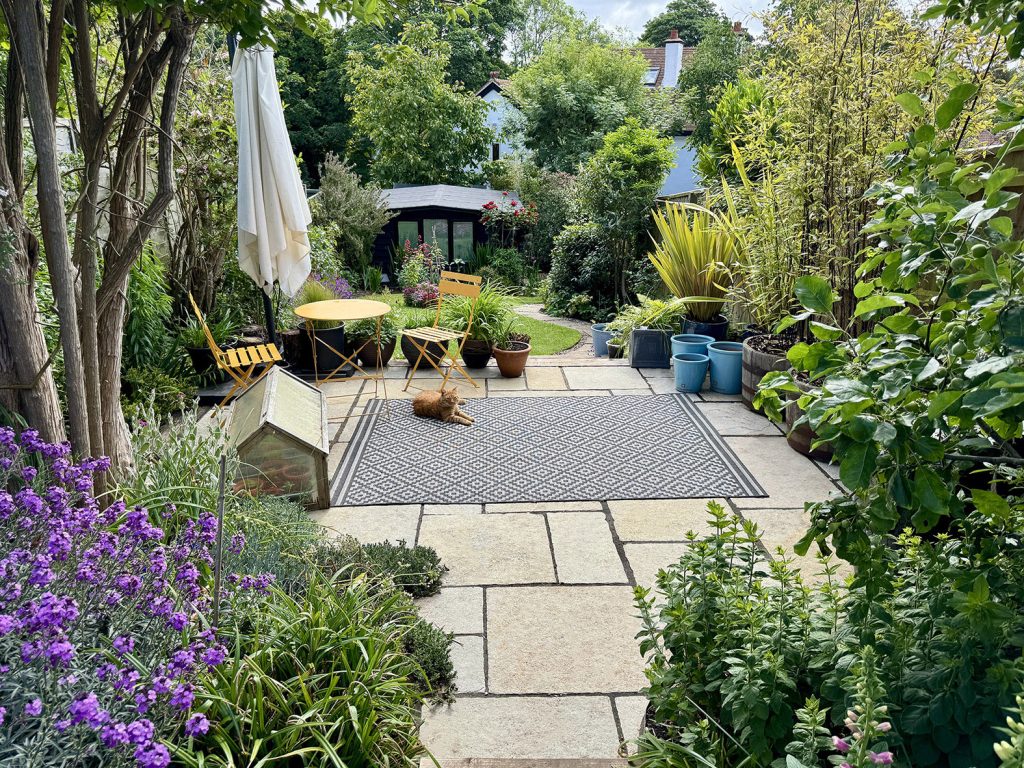
My garden transformation
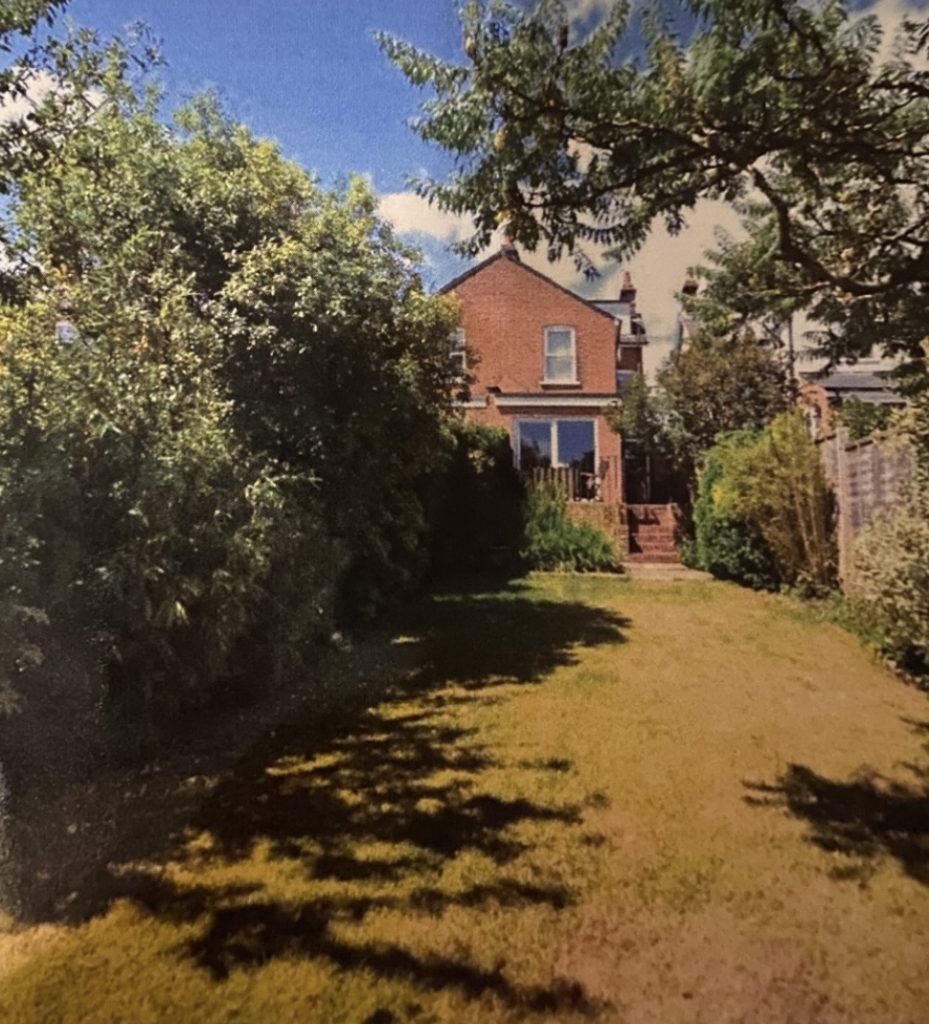
When the husband and I first moved in, our garden was nothing like the peaceful retreat it is today. Basically, we had one long, uninspiring patch of a weedy lawn with some tired shrubs and a few trees. Other interesting details(!) included a rusty old washing line and a pile of rubbish from an old gate to broken pots and balls. The previous owners had left them in a dumping area in front of the shed, which was covered in ivy. There was also an overgrown pond, which was almost hidden beneath a bed of out-of-control irises. So, we’d got our work cut out for us!
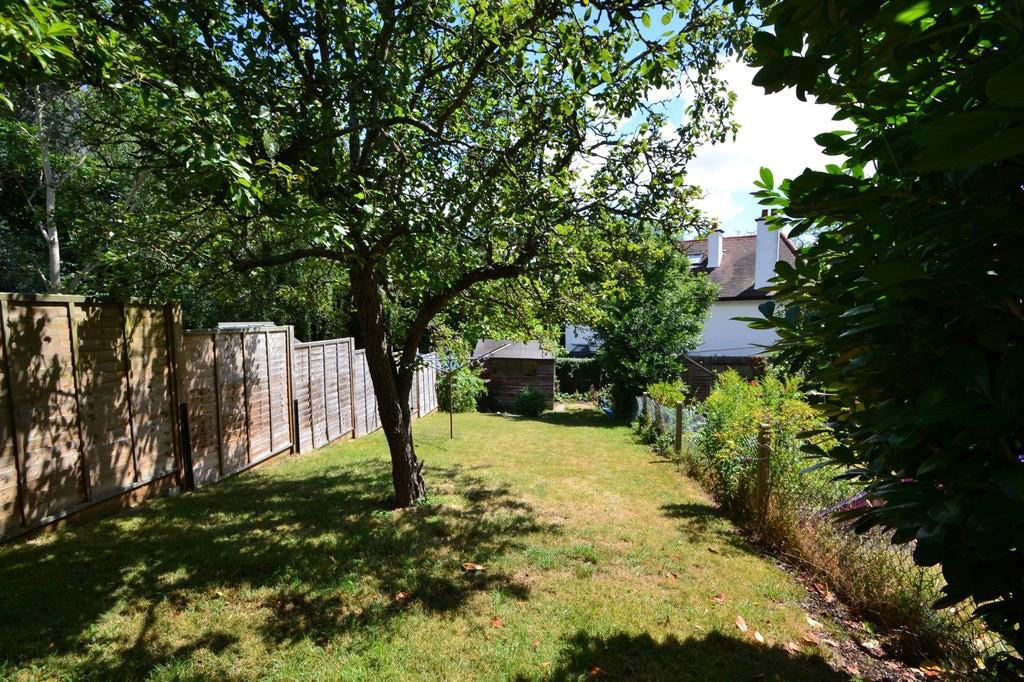
We also had a collection of big evergreen shrubs and a few trees, which didn’t belong to us. They covered one side of one of our garden and you can see them in all their glory in the estate agents’ photo. However, fairly soon after we moved in, a neighbour removed most of them, so the garden had huge gaps all the way along, showing the unsightly chainlink fence we had inherited. We soon felt like we were living in a shared garden, as our privacy vanished almost overnight. Over the years, I’ve learnt not to rely on other people’s planting; you never know when this could be removed and it’s always best to look at your own space and work with what you’ve got.
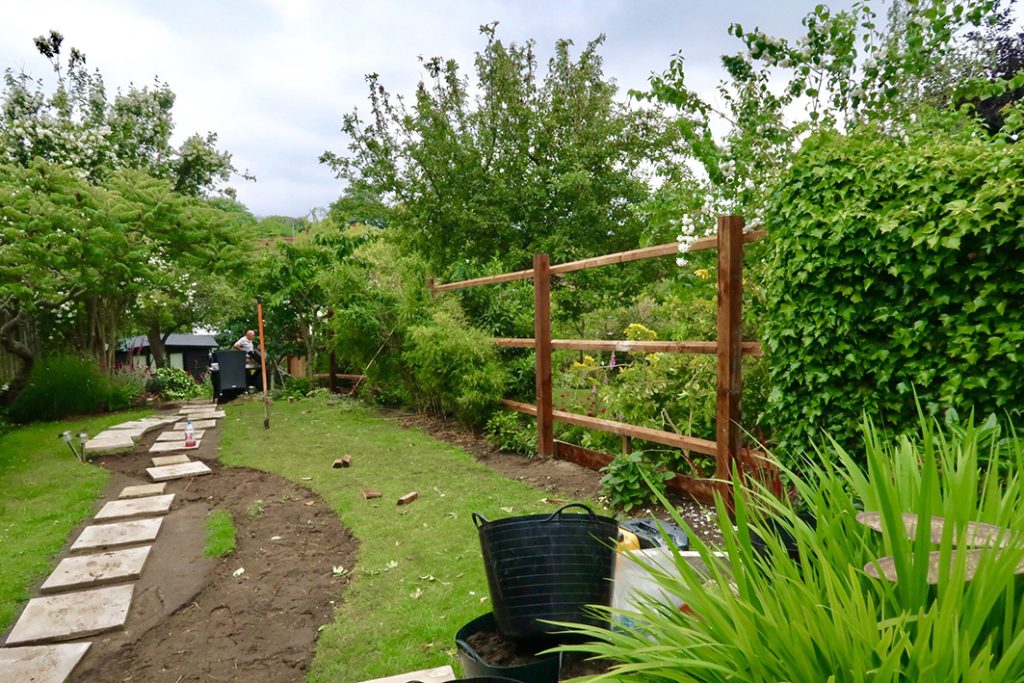
I still knew this garden had plenty of potential! So, I designed my space slowly to let it take shape and become the outdoors area it is today. We’ve spent a lot of our spare time here, landscaping and gardening, from digging and planting to moving plants around, dividing them and replanting and even removing a constant pest – ground elder. The husband and I spend more time out here in the spring and summer on the maintenance and growing seeds from scratch and planting. And it’s great fun to slowly watch the garden transform every season to become what it is today. I’ve still got plenty of projects on the horizon, such as a pond transformation I’m working on this summer, and I love the challenge of working with this narrow garden.
How we worked with our space
There have been plenty of challenges with this space, as it’s long and narrow. I’ve had to work with an awkward shape and think about ways in which I can create flow from the bi-folds to the shed. I didn’t want my garden to feel restricted in any way. But I also wanted to create ‘rooms’ which seamlessly flow into one another. This has meant I’ve had to play with perspective and layering. I’ve also gone through a lot of trial and error with the planting to make the most of different areas.
Today, my narrow garden is packed full with personality and we’ve managed to make the space feel bigger. I hope each of the ‘rooms’ I have created in my garden help to show what can be achieved in a small garden – all you need is a vision, plenty of hard work and a lot of patience, but it’s so worth it!
How to add interest to a small garden with maximum impact
In my long, narrow garden, creating rooms or zones have changed my plot of land into a multi-functional area, which has created an illusion of space. This method is so effective – I think of it in the same way I do when I design my home. The garden becomes a series of outdoor rooms, with their own mood, style and purpose, however they all flow into one another.
Using a raised bed to define an area
I’ve used a raised bed to create a pond fernery, which is a work in progress this season. I’ve added a variety of ferns and I can’t wait to see how these turn out. However, raised beds in a small garden are a great way to create definition when you’re tight on space. Also, if you have problems growing plants with your soil type, you can add your own mix above the existing soil below the bed. This way, it can be ideal for plant growth.
Making a statement in your garden
I’ve added statement greenery, such as my Chanticleer Pear tree and bamboo in pots; these both add impact and create screening. Choose one or the other from my collection of small garden ideas to help add height and a sense of depth to your design.
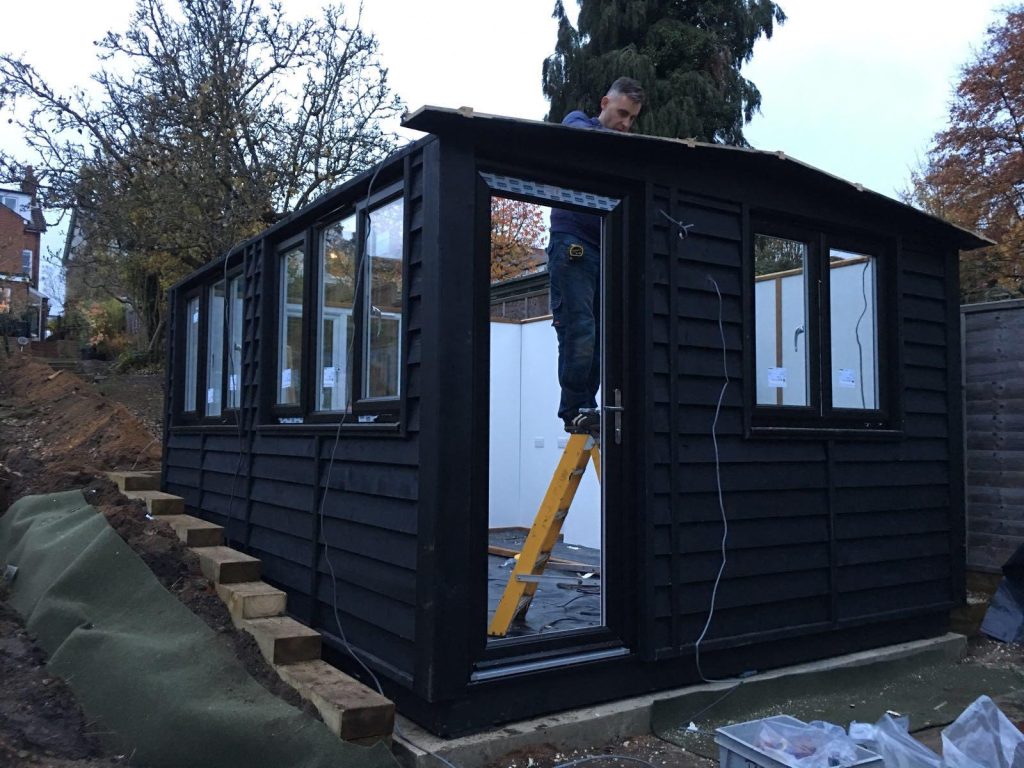
My studio also helps to draw the eye down from the top of the garden. This makes the garden appear longer as it takes attention away from the narrowness. It also gives the impression that you’re reaching a destination, which should work just as well in a compact, box-shaped garden. Another aim for me was to add a structured element to my design with a private retreat in which to work. Garden studios are so versatile, you can use them for anything from a home office or relaxing snug to a music room or games area.
Adding seating to define areas
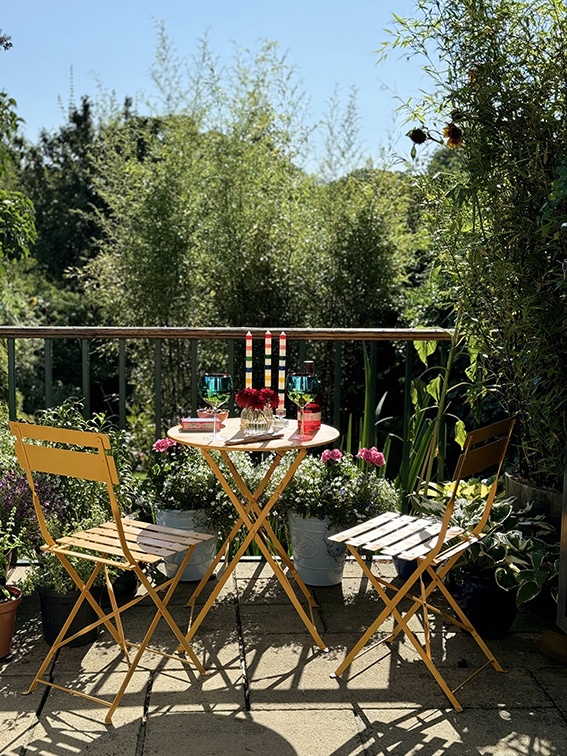
I’ve also got two dedicated seating areas – on our terrace and the patio, which are perfect for entertaining guests or relaxing for a bit of ‘me time’. I think one area of seating is essential for a small garden, such as placing a table and chairs on raised decking or a patio. This way, you can relax or enjoy a spot of al fresco dining alone or with family and friends. In my garden, the husband and my dad built the patio from scratch; it’s been an absolute god-send for entertaining.
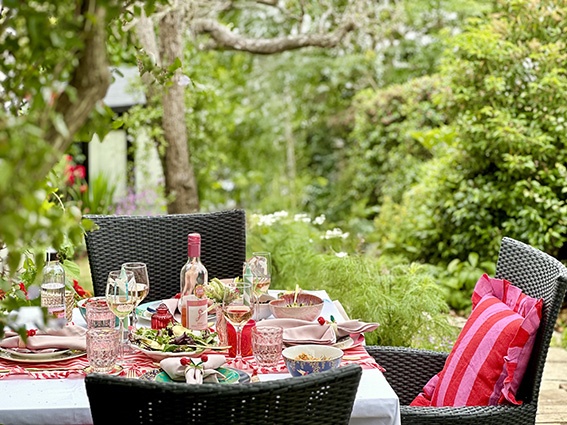
Other small garden ideas include introducing a gazebo or pergola if you want shade and a super-stylish privacy solution. Hammocks are also proving popular and these can add a fun element to garden design of any size. Think beautiful, bold colours and patterns, if you really want to make a statement.
Choosing the right plants for small gardens
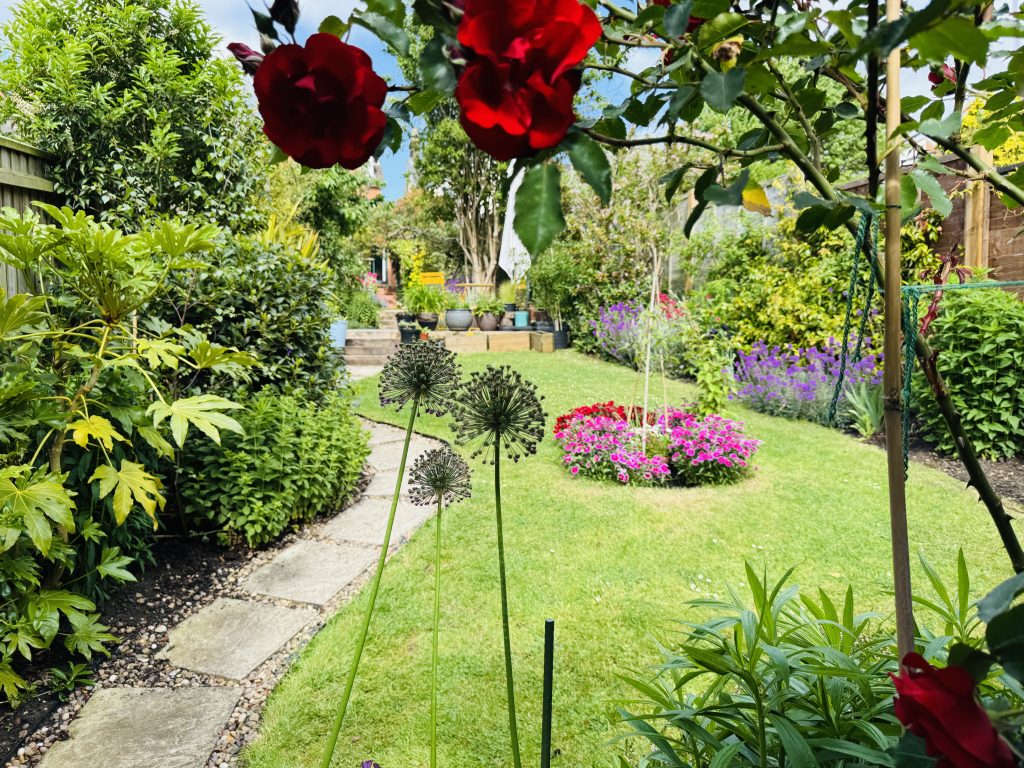
Our planting varies widely from annuals and perennials to evergreens to create structured displays along our borders. Here you can see alliums (just going over now), a rose, wall flowers, a clematis, jasmine and more
I suggest looking closely at the product details to check how big plants grow before you buy them. I tend to pick fairly compact varieties (apart from when I choose climbers) and a lot of perennials for a cost-effective solution with longevity in mind. In my garden, I’ve got a number of evergreen plants too to add some interest all year round.
Regardless of your garden size, don’t forget to think about the level of sunlight the plants will need. So, check these details before you buy. We have annuals and we tend to grow these in pots although we will also plant some out to add colour to areas in our garden. And, if your plants aren’t doing well in the spot they are in, you can move them. We’ve done that with a lot of them over the years, and many of them have since flourished.
Picking trees
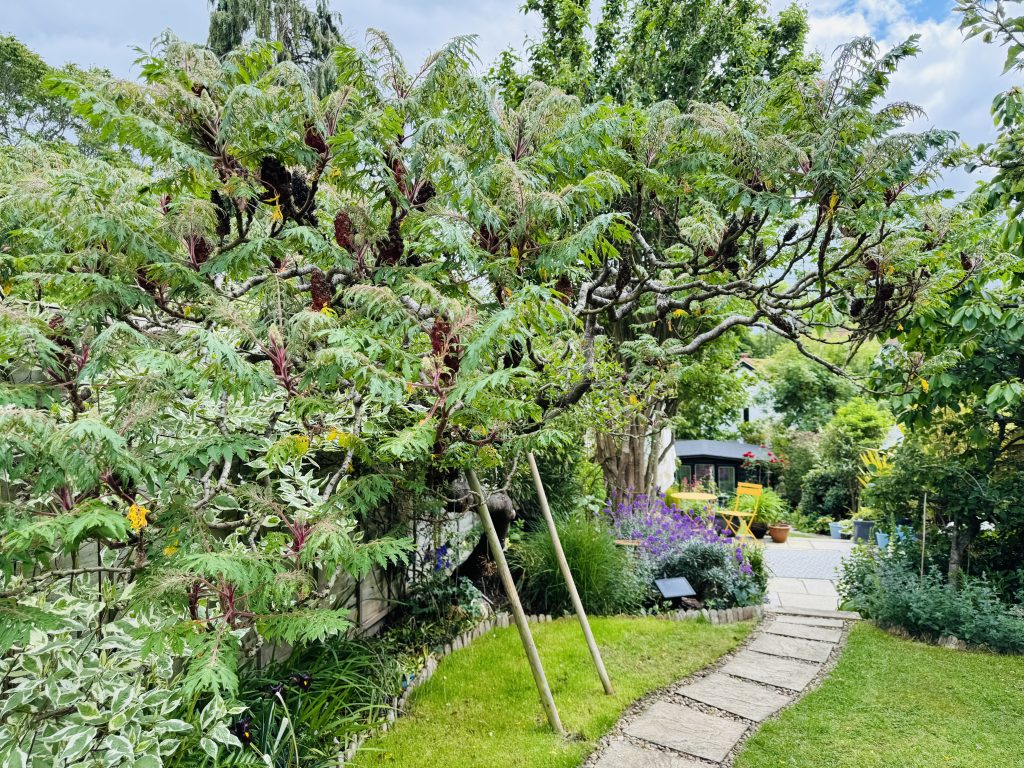
If you like trees, why not choose miniature varieties? Trees and shrubs help to add height and structure without towering over the garden. We were lucky that our mock orange and lilac shrubs were already here when we moved in. Both are tall but this isn’t an issue, as they create height without taking up too much horizontal space. If you’re considering trees, you still need to water newly planted ones in their first few years to encourage strong root systems. And, if your trees are already established, you don’t need to water them regularly unless there’s a drought.
Potted plants & climbers to add interest
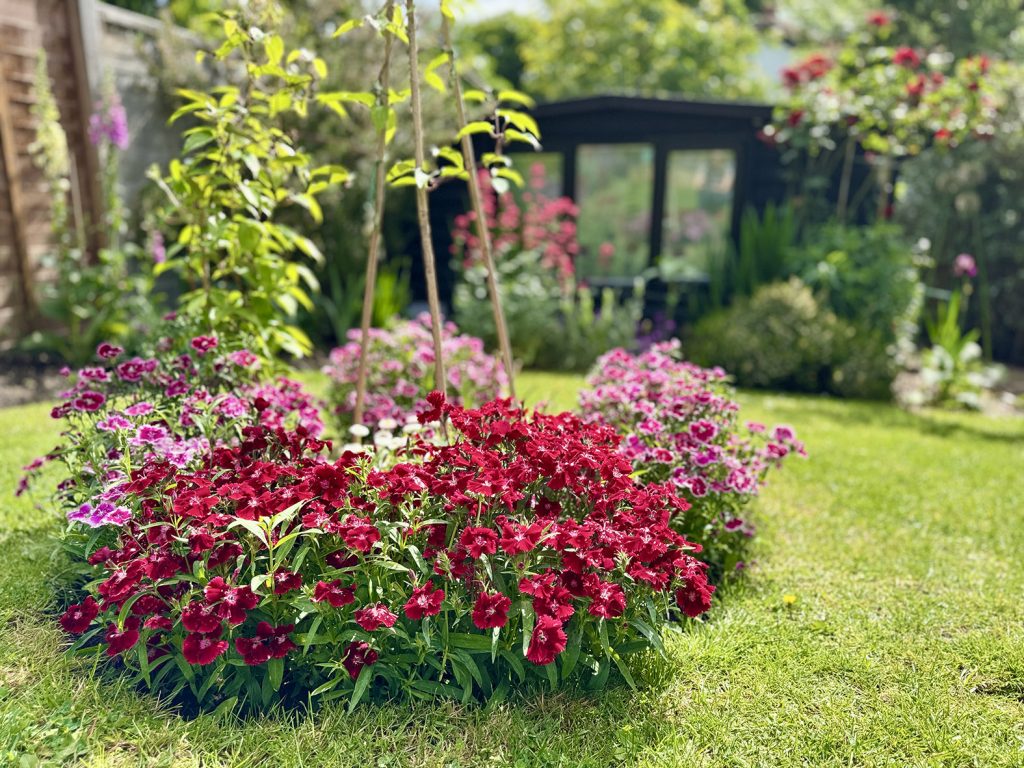
Putting plants in pots and containers is one of my favourite small garden ideas. This is because you can move them into different areas and use them to create layering in your garden. Consider hanging baskets too (I’m yet to do mine and this is on my to-do list!), to add colour and height in your garden; this will also free up ‘floor’ space.
I also love climbing plants; they are an easy way to hide fence panels or blank walls too and they instantly add depth to a garden. The sorts of climbers, which can look gorgeous, include clematis or jasmine for the scent. You can also grow them on obelisks, trellises, pergolas or walls without taking up too much ground space; the choice is yours.
Enhancing privacy in small outdoor spaces
Lack of privacy can be a nightmare in a small garden. In ours, it may be long, but it’s so narrow and it was initially overlooked.
Small garden ideas with fencing
One set of neighbours had already installed their own fence on their side, which was great. We also kept all of the existing plants, such as the lilac and mock orange shrubs, which help to shield our view of their garden from the kitchen. Now, that we have our own fence too, we feel super relaxed and comfortable in our outdoor space.

We have added soft, natural screening in the form of climbers, which enjoy shade, to our fencing. Don’t forget to check whether they prefer a sunny or shady position. We already had a couple of bamboo plants on our side which were there when we moved in. Also, a few other shrubs helped to soften the look. You can even add trellises to the top of your fencing for more privacy. However, you may need to ask neighbours for permission first, if the height will be above standard fence height (2m).
Bamboo in barrel planters
Other screening ideas, which will work wonderfully for small garden design, include one or two containers filled with bamboo. In my garden I’ve got various collections and I’ve picked tall plants so it would take less time to shield us. The barrels look stylish and the tall leaves sway delicately in the breeze; this helps to soften the space and screens unwanted views. The bamboo also adds height and interest, creating layering in our garden; here it helps us feel like we’re in a secluded sanctuary.
In my pond area the bamboo provides shade and adds real structure to this part of my back garden. If you want to grow them in smaller pots, why not? Look for less invasive types, such as black bamboo (this is what I’ve got), which is a clumping variety. I would still plant them in pots however with concrete or flagstones beneath them or use a root barrier.
Other strategic planting to create natural barriers
Strategic planting enhances privacy in small gardens and can also create a visual barrier from neighbouring houses and gardens. Dense hedges, tall grasses and shrubs also serve as natural barriers that block views and provide seclusion. These plants not only improve privacy but also create a layered, visually interesting landscape.
Using smart design choices to maximise space
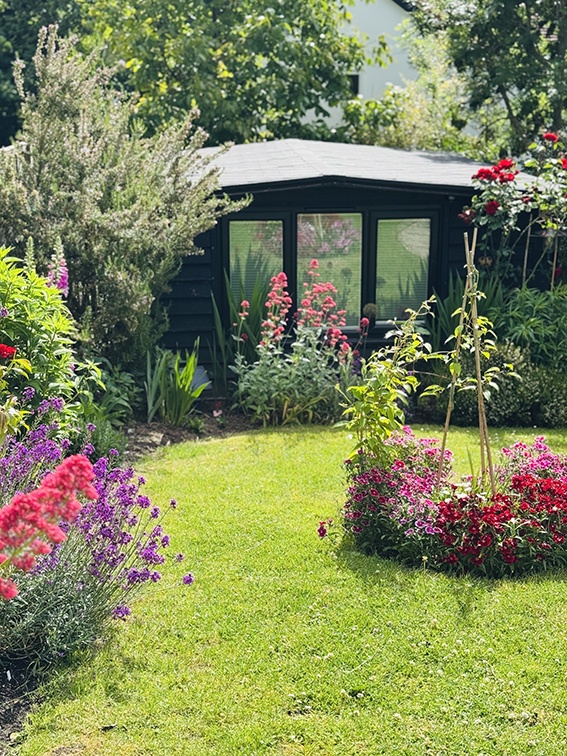
You can make your back garden feel much better with the right choices. Over the years, I’ve tried to create a cohesive colour palette. You’ll notice plenty of pinks, in the heathers, and purples, in the alliums and wall flowers, in my studio garden. I’ve also keep an uninterrupted sight line down one side of the garden, so the studio is still in view.
Curved pathways with paving stones
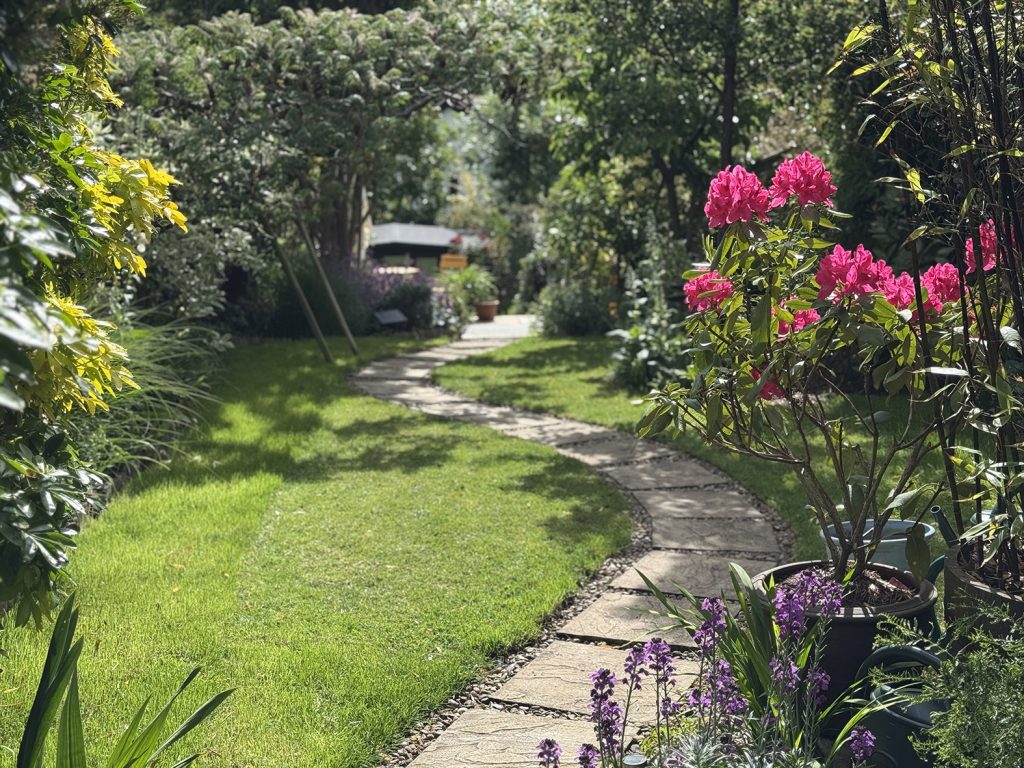
I wanted to add more depth and, of course, width to my garden design with two curved pathways. One leads you to the patio, our outdoor entertaining area and the next one winds its way to my studio. These gentle curves make the garden feel more spacious. Here, we’ve used large paving stones surrounded by shingle to create these paths. My pathways balance the space with a cohesive finish.

Practical features for a small garden space
There are a few features you can add to your garden, which can transform how you use a small space. If you’re looking for an area, which is fun and functional, why not introduce a barbecue, pizza oven or fire-pit? The key is to choose models, which don’t blow smoke into neighbouring homes, or position them wisely. You can buy gas barbecues and pizza ovens and smokeless fire-pits for a small space, too.
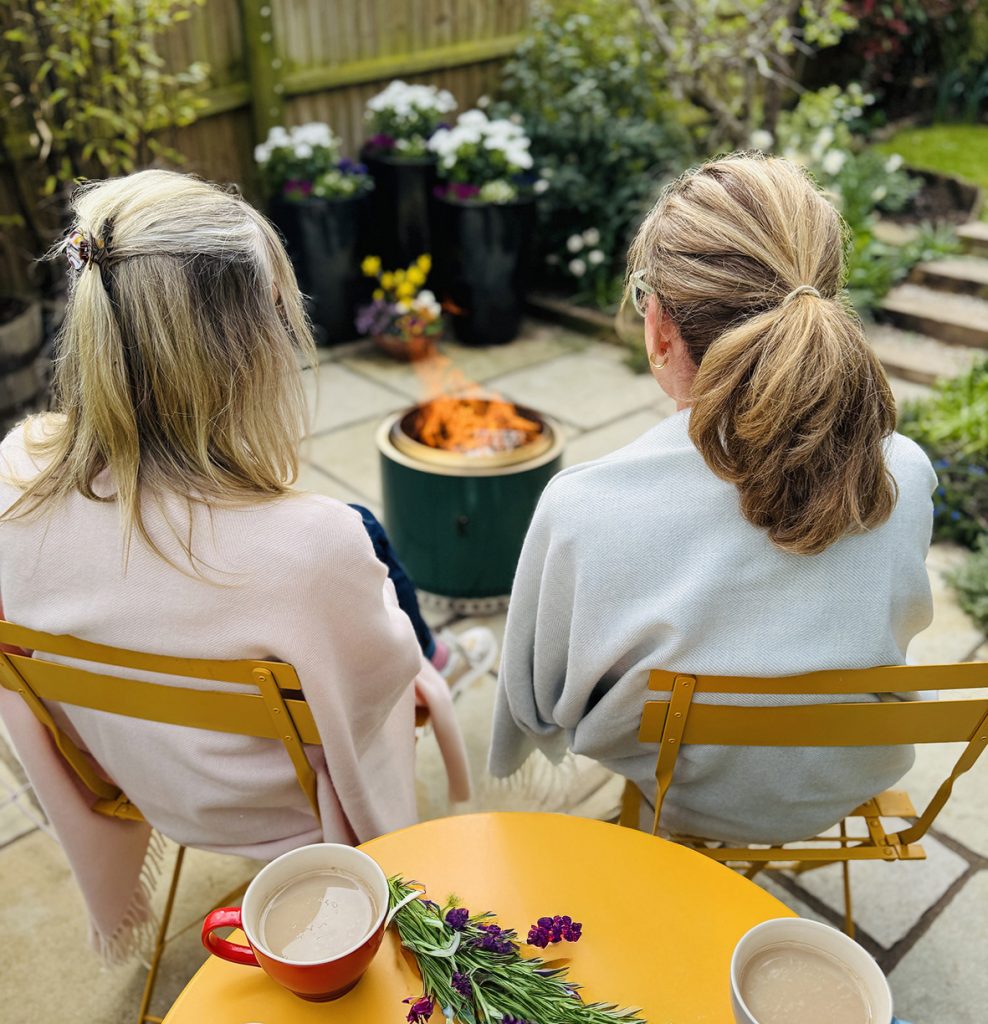
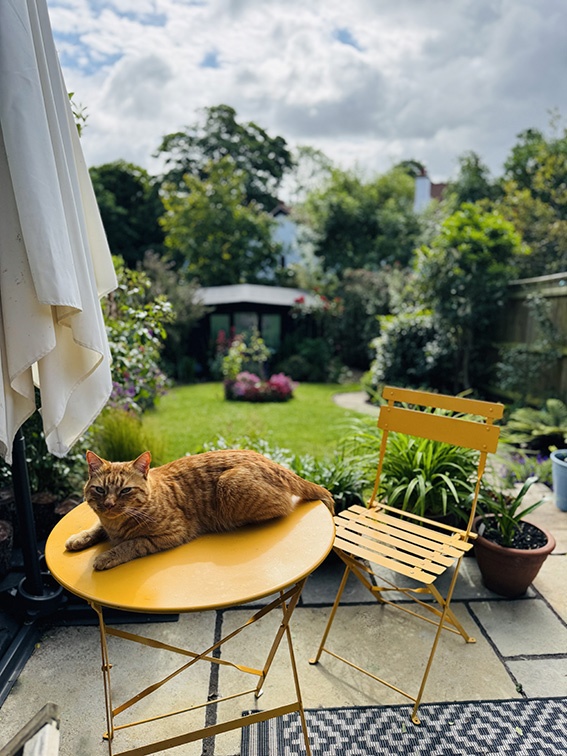
Portable furniture can also help you make the most of your floor space. Think fold-away, lightweight versions and don’t forget to factor in some storage. A small shed, slim shelving units, cold frames and miniature glasshouses can all serve a purpose, if you’re looking for small garden ideas. It’s also important to minimise any clutter and keep things tidy. This way, you can truly enjoy your garden, regardless of its size.
Small garden ideas with lighting
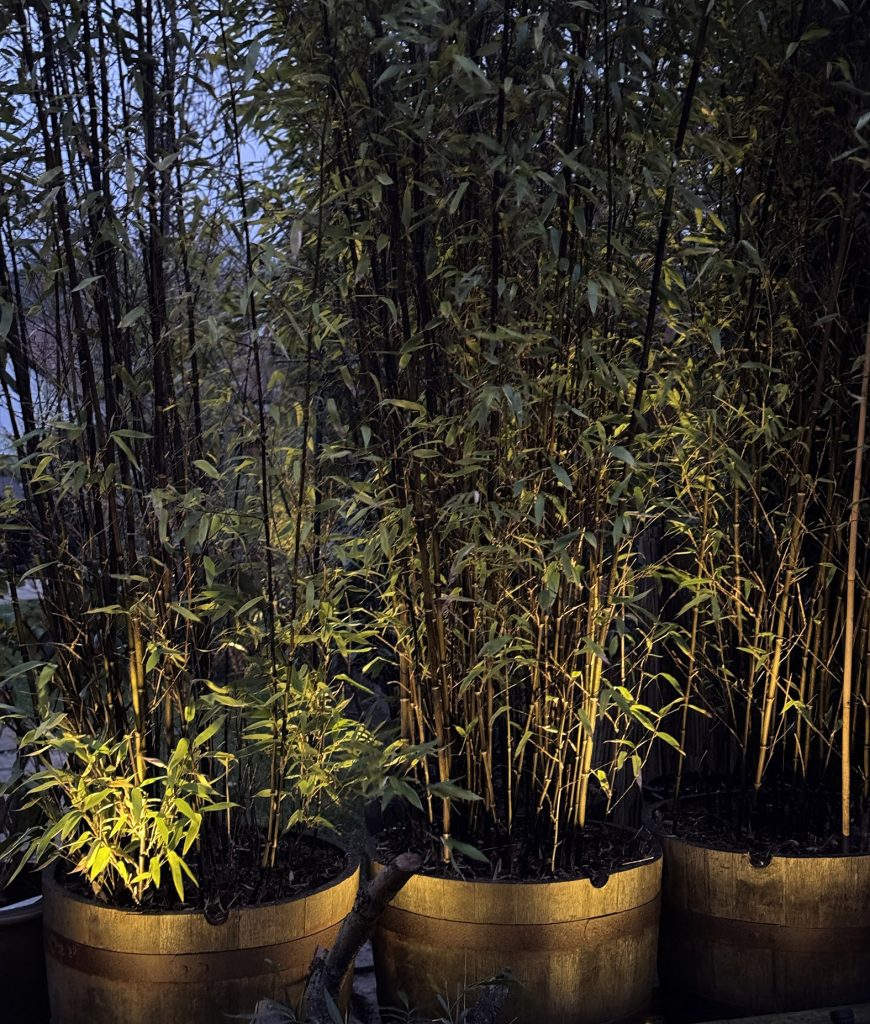
I think it’s amazing what you can do with some strategically placed garden lighting. A series of spotlights will help to brighten dark areas; they can highlight feature trees, shrubs, bamboo or a garden sculpture. I’m a big fan of solar-powered and battery-operated options. Just remember to remove the batteries when you’re not using your lights for long periods of time. I use rechargeable batteries too; I love the fact that I can use them without running up the electricity bill! Wall lights and string lights can also look fantastic, if you drape them across a fence or wall.
These are magical touches, which will instantly add a focal point to your garden as night begins to fall. I’m currently planning this year’s lighting solutions in my garden and I can’t wait to show you what I create.
Year-round loveliness in your small garden
Seasonal planting and regular maintenance are two of my secrets to keep a small garden looking its best. Although I have to admit, in winter, I always feel quite sad when most of the colour drains away. So, when it comes to winter, I haven’t mastered how to keep my outdoor space full of life. But I do have some tricks up my sleeve; I’ve dotted hellebores and jasmine around, which tend to do well in these months when everything else has faded. Hardy evergreens are great, so you’ve got some greenery which will keep looking good in winter regardless.
Maintenance garden ideas
The husband is particularly good when it comes to our garden maintenance. However we both love spending time out here, from pruning and mowing the lawn to deadheading and ‘strimming’. This work really can make all the difference in warmer months. And, if you can keep your garden looking neat and tidy all year, you can enjoy it, whatever the season. I’m going to produce a blog, giving you some of my maintenance tips and tricks soon, so watch this space.
Small but perfectly formed garden design
If you create a functional small garden, which looks beautiful too, you can transform your outdoor space. It’s all about choosing the right plants, adding privacy screening and practical features, and maximising the space you have. Being outdoors should be all about enjoyment and relaxation. And, even if your garden occupies a small space, this can be the best place for a reset.